

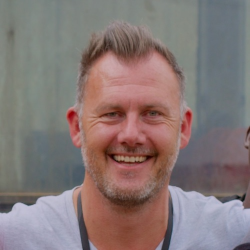
Robert Barnes
I am driven by the belief that good communication does more than inform. It builds connection, inspires trust and invites change. Over the past two decades at GRID-Arendal, I have worked across projects, platforms and disciplines to help translate environmental knowledge into tools people can understand, feel and use. Whether through video, design, facilitation or strategy, I help teams communicate with purpose. I believe that creativity should serve clarity, and that even the most technical ideas deserve a human voice.
Community Based Storytelling
This course is expected to examine how community voices, local knowledge, and storytelling can support understanding and stewardship of blue carbon ecosystems. Topics may include participatory approaches, ethics, and narrative methods grounded in place and lived experience. Content is indicative and may evolve.
FreeEffective Communication Methods
This course focuses on communicating blue carbon science and practice clearly and responsibly to different audiences. You can expect to explore framing, messaging, and practical communication techniques for policy, technical, and public contexts. The final structure and examples are subject to development.
FreeBaselines, change detection
This course is expected to focus on establishing baselines and detecting change over time in blue carbon ecosystems. Topics may include reference conditions, monitoring design, remote sensing, and interpreting trends for management and reporting. The exact scope and methods covered may change as the course is finalised.
FreeField and lab methods (MRV)
This course is expected to cover practical approaches to measuring, reporting, and verifying blue carbon, including field sampling, laboratory analysis, and data quality considerations. It will likely introduce commonly used methods, strengths and limitations, and emerging tools used in blue carbon assessments. Content is indicative and subject to refinement.
FreeBlue Carbon Foundations
This course introduces the core concepts of blue carbon, including mangroves, seagrasses, and tidal wetlands, and their role in climate mitigation, biodiversity, and livelihoods. You can expect to explore why these ecosystems matter, how blue carbon fits within climate and ocean policy, and how science, governance, and communities intersect. Content and focus are tentative and may evolve as the course is developed.
Free
Communication of Findings
This introductory module equips participants with the basic knowledge to effectively communicate water quality monitoring results to diverse audiences, stakeholders, and the public.
Free
Sampling Design, Production of Information, and Data Management
This course will give the fundamentals of sampling design, production of information, and data management in the water quality monitoring programme.
Free