About This Course
Building on the foundational monitoring principles introduced in the Course: Water Quality Parameters and Monitoring Design and the data management and analysis techniques covered in Course: Sampling Design, Production of Information, and Data Management, this course focuses on translating technical results into accessible and impactful communication. The objective of this course is to build participants’ capacity to effectively communicate water quality monitoring results to diverse audiences, including policymakers, communities, media, and technical stakeholders. The module focuses on translating scientific evidence into clear, relevant, and compelling messages that support public awareness, informed decision-making, and evidence-based environmental policy. From raising public awareness to informing policy, the course emphasises knowledge-sharing tools for reporting scientific results. Participants will review the key pollutants affecting water quality, along with their consequences on human and ecosystem health. This online session will give the participants insights into science communication, using storytelling and data visualisation for sharing findings through various communication channels. The course also covers mechanisms for presenting results to both the public and decision makers to drive awareness and influence environmental policy.
Learning Objectives
Participants should be able to translate water quality monitoring results into clear, accessible, and policy-relevant messages that raise awareness, support informed decision-making, and contribute to improved environmental management outcomes.
Features
- Science communication
- Framing key message
- Dissemination strategy
Target audiences
- Policy Makers
- Private Sector
- General Public
- Students
Requirements
- Water Quality Parameters and Monitoring Design Course
- Sampling Design, Production of Information, and Data Management
Curriculum
- 8 Sections
- 6 Lessons
- 2 Hours
- Introduction1
- The Basics of Science-Policy Communication1
- How Science Reaches Decision Makers1
- Framing Your Key Message1
- Storytelling and Environmental Journalism1
- Visual Communications and Dissemination Strategy1
- Final Quiz1
- Survey1
Instructor
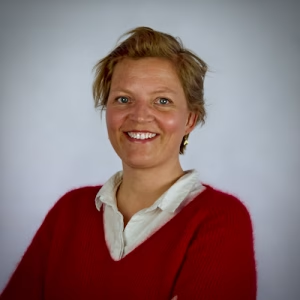
As Strategic Lead for Communication and Media at GRID-Arendal, I ensure that our environmental storytelling is grounded in science, shaped by values, and designed to reach people where it matters. I believe in the transformative power of communication to shift perspectives, strengthen connections, and catalyse meaningful action.